Showing posts with label Feminism. Show all posts

Wednesday, 13 July 2016

The National Gallery

Mary Richardson was a Canadian Suffragette known for her friendship with Emily Davidson as well as her famous actions at the National Gallery. Enraged with the lack of government action for the women's suffrage, Richardson took to the famous Velasquez painting with an axe that she used to slash the artwork seven times. She was very dedicated to the cause and was willing to go to jail for her actions. Richardson particularly despised the 'Rokeby Venus' masterpiece by Velasquez with its very nude depiction of feminine beauty. 


This painting now holds a new significance as it represents the struggles and lengths many women were willing to go through for the feminist movement. Without these many dedicated individuals, there may not have been such great coverage and attention brought to the cause and perhaps the movement would not have been as great or significant.

During our visit to the National Gallery we found many pictures depicting different stories and a couple of painting stood out to us as we believed such paintings would surely be loved by feminists to destroy.


Trafalgar Square

Trafalgar Square is the largest square in London and has historical value.

Trafalgar used to be a courtyard of rows of houses that were converted from stables. the typical design would be rooms above, built round a yard or alley.  This used to serve the Whitehall palace. It used to be called Charing but later was changed to Charing Cross which is still seen today as an underground tube is named after this. During the 1800s, it has had undergone many changes and by 1830 it was officially named Trafalgar Square.

Furthermore an architect, Sir Charles Barry designed Trafalgar Square to link with the National Gallery  between 1840 to 1845.  The National Gallery was linked by staircases which included statues and two fountains. by 1867 everything was built including the bronze lions which is placed at the base of Nelson's columns.

The site of Trafalgar square had become a place where demonstration and rallies were held on political,religious or general issues. It is also a great public space which allows multicultural events to take place.

 Significant Moments in Trafalgar Square 

  • May 2007, there was a campaign by London locals to promote 'green space', so the square was grassed over with 2,000 square metres for two days
  • July 200,7 a parade was held to celebrate the 60th independence anniversary of Pakistan from Britain. 
  • Eid Festival on July 2016.
  • The fountains being died red in protest against cuts made to domestic violence services, by the feminist group Sisters Uncut in November 2015. Read the article here.


Martha Mosse on the Labelling and the Importance of Feminism


An interesting insight into labelling and feminism by Martha Mosse at TED Talks.


Tuesday, 12 July 2016

A Delivery for 10 Downing Street

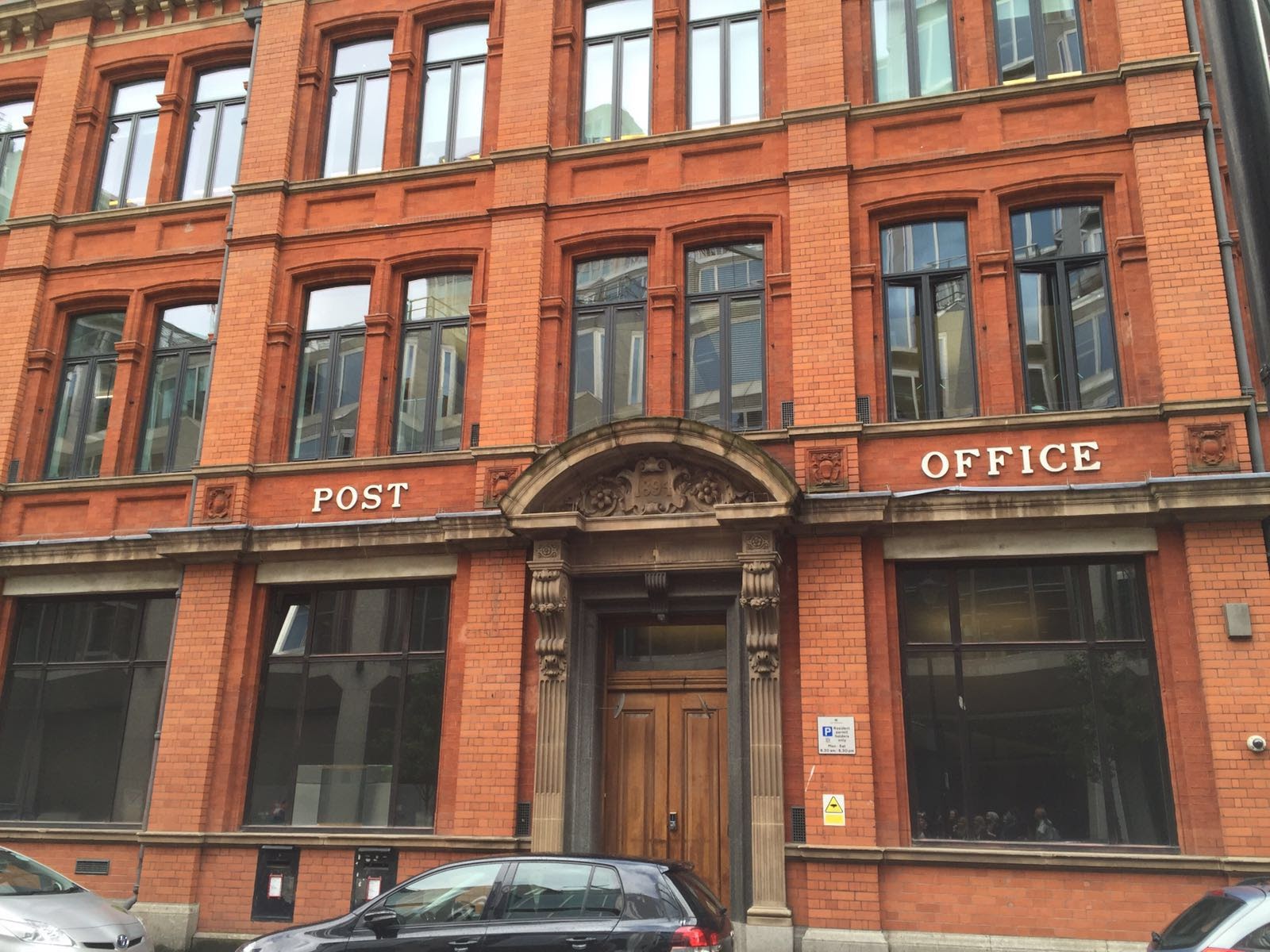
The fight for women's suffrage did not just consist of the basic protesting and marching as the Suffragettes found clever ways to gain media coverage and attention from various people in power. On the 23rd of February of 1909, two women of the Suffragettes had commenced their plan of becoming 'human letters'. After all their time spent in the Post offices, they did some thorough research and came up with the idea to post themselves to 10 Downing Street as there was nothing written against such action in the postal rules or guidelines. Although the idea (in my opinion), was so brilliant and unique, it did not have the exact success it deserved as a Guard Official refused to sign for the 'delivery' and sent both the ladies away.


Post Offices seemed to hold a particular significance to the Suffragettes as they also used radical methods, such as smashing the post office windows, that helped them gain their vote.

Monday, 11 July 2016

'Feminism...seems a bit extreme to me'

Many people are deterred from acts of Feminism or even fear what it could mean, but what does feminism actually mean? Feminism is often treated as an insult but is it really as threatening as it seems?
This BuzzFeed video shows that feminism isn't as scary as it may seem and can mean different things to different people.


Theresa May as our Prime Minister!

May? No Way?


After the devastation of the EU referendum results, we sadly saw our Prime Minister David Cameron resign – this meant that the role for Prime Minister was up for grabs!


It was seen to be a bitter fight between Boris Johnson and Michael Gove, both ‘Leave’ campaigners as Gove eventually ‘knifed’ Johnson on his potential to be the next national leader. Whilst all the drama was occurring, Theresa May, Home Secretary at the time, was somewhat confident at gaining that position but was not very vocal. She was seen as a popular candidate as she had wide range support from the majority of the Conservative Party and Cameron himself.

After both Johnson and finally Gove stepped down in the leadership race, all who was left was Andrea Leadsom, Minister of State for Energy.

What a proud moment for Britain as we have two female candidates waiting for the role of Prime Minster! As feminists ourselves, we thought this moment was truly inspiring for young girls and women showing us how nothing is impossible for women and if we strive and show passion in what we do, nothing and no one can turn us down. A female Prime Minister was inevitable! (Well obviously)


(left to right) Andrea Leadsom and Theresa May
On the 11th of July, the race to be Prime Minister was cut short for Theresa May as Leadsom stood down after it was deemed by many that she didn’t have the right experience and take on the leadership role and he CV was also questioned. This left May who is now the second female Prime Minister of Britain, she was left ‘honoured and humbled’.

From the results of Brexit, May promises to make Britain great again and make a ‘success’ out of Brexit. Hopefully with the country in her hands we can soon see some positivity from the referendum results for the country.

Theresa May entering 10 Downing Street

With May now being Prime Minister, others have another question on their mind: will we see another Thatcher?

“Together we will build a better Britain” Theresa May – Prime Minister


Saturday, 9 July 2016

The Suffragettes in Holloway Prison


Holloway Prison, now closed, was the main prison where women deemed as criminals would be sent to, including many suffragettes and women activists.


Many suffragettes were force fed during their stays at Holloway as they went on hunger strikes as a way of continued protesting in prison. This was mostly done through a tube in the nose or the particularly painful method of a tube through the throat to the stomach. The Prisoners Temporary Discharge for Ill-Health Act 1913 was often used in order to discharge such prisoners who took part in hunger strikes. However this usually led to a 'cat and mouse' type situation where the police, after discharging the prisoner, would then follow up and re-arrest them in an ongoing cycle. Despite this, women continued with their actions for their movement, determined to overcome the difficulties for the ultimate result of gaining the vote.


The conditions of the stay for the women were measly and quite degrading as they were stripped of their identities, only to be known by their prisoner numbers, they were left with little to no privacy. With strip searches, inspections and work roles, their days were tiresome and strenuous, making the starvation for some women unbearable. For instance, a woman called Kitty Marion used screaming to combat the force feeding and to get through the pain. Also another inmate Rachel Peace was not so lucky as she 'lost her mind' due to her imprisonment.


There was a perverse treatment towards inmates, particularly in the case of Margaret Thompson, who facing a disability which made her small and frail was force fed and treated extremely harshly. After 10 days of what she called 'incredible suffering', she was released due to her being a 'physical wreck'.


The treatment faced by many women in Holloway was inhumane and would definitely not be allowed in today's society, presenting the extent in which the Suffragette Movement impacted the life of women today as they paved a better future for women through their suffering and perseverance.


During our visit to Holloway Prison, we met a staff member who gave us a deeper insight into the prison, without revealing any classified information. We have altered their voice for the sake of anonymity.


Holloway prison was originally opened as a mixed prison in 1852, but was later turned into a female only prison due to the high demand for female prisoner space. Over the years the prison has held many famous inmates ranging from Oscar Wilde to Christabel Pankhurst. There were also five executions by hanging of inmates from Holloway Prison, the last being Ruth Ellis in 1955. These prisoners were buried in the prison walls in unmarked graves, however the former four of the remains were moved to a grave at Brookwood Cemetery.
With many prisoners feeling unsafe recently, the prison was deemed unsatisfactory to continue being used as it was said to lack the modernity and safety, with 35 cases of self harm a week and most inmates suffering from mental health issues. The prison was closed in 2015 due to these reasons.


#WhatIReallyReallyWant

Screen Shot 2016-07-07 at 12.43.14.png
Screen Shot 2016-07-07 at 12.42.21.png

The #WhatIReallyReallyWant is a collective project that is created to inform world leaders what girls and women need. World leaders of United Nations in 2015 signed the Sustainable Development Goals which aims to end poverty, tackle climate change and fight inequalities. One of their promises was to give females a chance and put them first. This project is giving girls and women a huge platform to express their needs to these world leaders so they can help tackle gender inequality.


What can you do ?


Go to http://www.globalgoals.org/#the-goals and pick a goal which you believe is important. Then you just have to post a picture of yourself holding up the goal you want on social media, using the #WhatIReallyReallyWant!


Thursday, 7 July 2016

A letter for our Prime Minister
Dear Prime Minister,


I would like to bring to your attention the serious problem of oppression against women through the administering of taxes. I will be addressing issues about the unfair treatment of women in society, in this letter and  hope you will address these issues seriously with the small steps that I urge for you to take.


A Jaffa cake is tax free in the UK, as it is branded as a necessity. After a long dispute in the courts the McVitie's treats were classified as biscuits. So we live in a society where a court dispute can lead to a biscuit company gaining a lot of money for being incorrectly taxed. It seems like a smart and efficient way to save money for the company, right? It is great that the systems we have in place in Britain can lead to business efficiency and that laws can be used to help us save money on Jaffa cakes but still pay a tax on our tampons...wait a tax on tampons?! Seems like a stupid idea to tax an item that is needed by women who go through their menstrual cycles every month. It's not a big deal though, right? Women should just deal with the laws and taxes of the land and stop complaining about their periods. The world gets it by now, just stop publicising such a thing. Right?


How can women be expected to say quiet and accept the law when it is this unreasonable. This tax free scheme seems like a good idea to help people afford items that are necessary such as milk and bread. However the scheme is heavily flawed as a product so necessary and crucial is being taxed and branded as a luxury item as though women can control their cycle and simply choose to keep clean with sanitary products. This simple right is being taken away from many women due to the fact that tampons are less affordable than they could be. When will women be given the rights they deserve? When will Parliament stop supporting this oppression of women?


We urge you; our Prime Minister to mobilize Parliament to change the law on the tampon tax and allow women to live a clean and healthy life by removing this tax on a product women can't help but need.


Thank you for your time and I hope to see some significant changes in the future for women to be treated more fairly in the UK with this one small step of removing the tax on women's menstrual tampons.

Monday, 20 June 2016

St George's Church


Feminism is the ideology that aims to improve the treatment and role of women in what they believe to be a very patriarchal society. Feminists also believe that men and women should be treated equally in the best way possible. The Suffragettes are known to most as famous feminists who advanced this political movement greatly since the early 1800s. They are mostly known for their action against the unequal treatment of women where women were not allowed to vote in most political elections. Their campaigning contributed to the cause, granting women the vote in Britain in the November of 1918, through the Eligibility of Women Act.


We decided to explore places around London to find out more about the Suffragettes' movement with a tour from our teacher and politics enthusiast, Annabel Swift. Our first stop was at St George's Church in Bloomsbury Way. This was where the famous Suffragette who threw herself under King George's horses, Emily Davidson's memorial service was held. In protest to the ban against attending Davidson's funeral, thousands showed their support for her commitment and bravery at St George's Church as they celebrated her dedication with a memorial service campaign. We visited this location in remembrance of the so called 'terrorist' on the anniversary of the memorial service on the 14th of June 1913, marking the 103rd anniversary for the campaign against her unruly branding as a terrorist instead of the title she deserved as a brave activist who paved the way for women to be considered equals to men through their ability to vote. Standing on the steps of the Church, we felt a sense of pride and gratefulness that as young women, we have the ability to express our political beliefs and are given the opportunity to vote in free and fair elections.


St. Georges Church - we visited this on the 14th June, marking Davison's memorial  


As women living the twenty-first century, we often take advantage of the rights and freedoms we have been given when women such as Emily Davison and Silvia Pankhurst had to cry out and risk their lives just to be heard. This empowered us to speak out and ensure that as women, we should never have to settle for less and we vowed that we would not accept any unequal treatment due to our genders nor would we allow ourselves to be forgotten or subsided by men when we can and should stand amongst men and others on an equal path to success.
We hope that you can also allow yourself the same chances and that the world can move forward on issues such as the gender pay gap or gender discrimination to give everyone the equal chances they deserve in life.

The Suffragettes of Bow - LSE Womens Walk

 Growing up in East London and waking around in Bow seemed so normal in our that are lives filled with rights and freedoms. We didn't think about the struggles women had to go through as they fought for what we believe to be basic rights on the streets we so freely roam. I definitely did not think about how privileged I actually am in compared to so many strong women such as Emmeline Pankhurst. These women fought to ensure that women could be treated with equity and so that we would be valued in society. Their dedication and bravery that helped women gain the vote was just the beginning of the movement for women to have better life chances and rights as well as freedoms that we otherwise would not have had without the work of so many influential women.

The Suffragettes would often use the Bromley Pubic Hall as a meeting place to discuss the campaigns and plan ways in which the position of women could be furthered in society.

We visited the Bromley Public Hall (along with 'Nairat') where the Suffragettes would often meet.
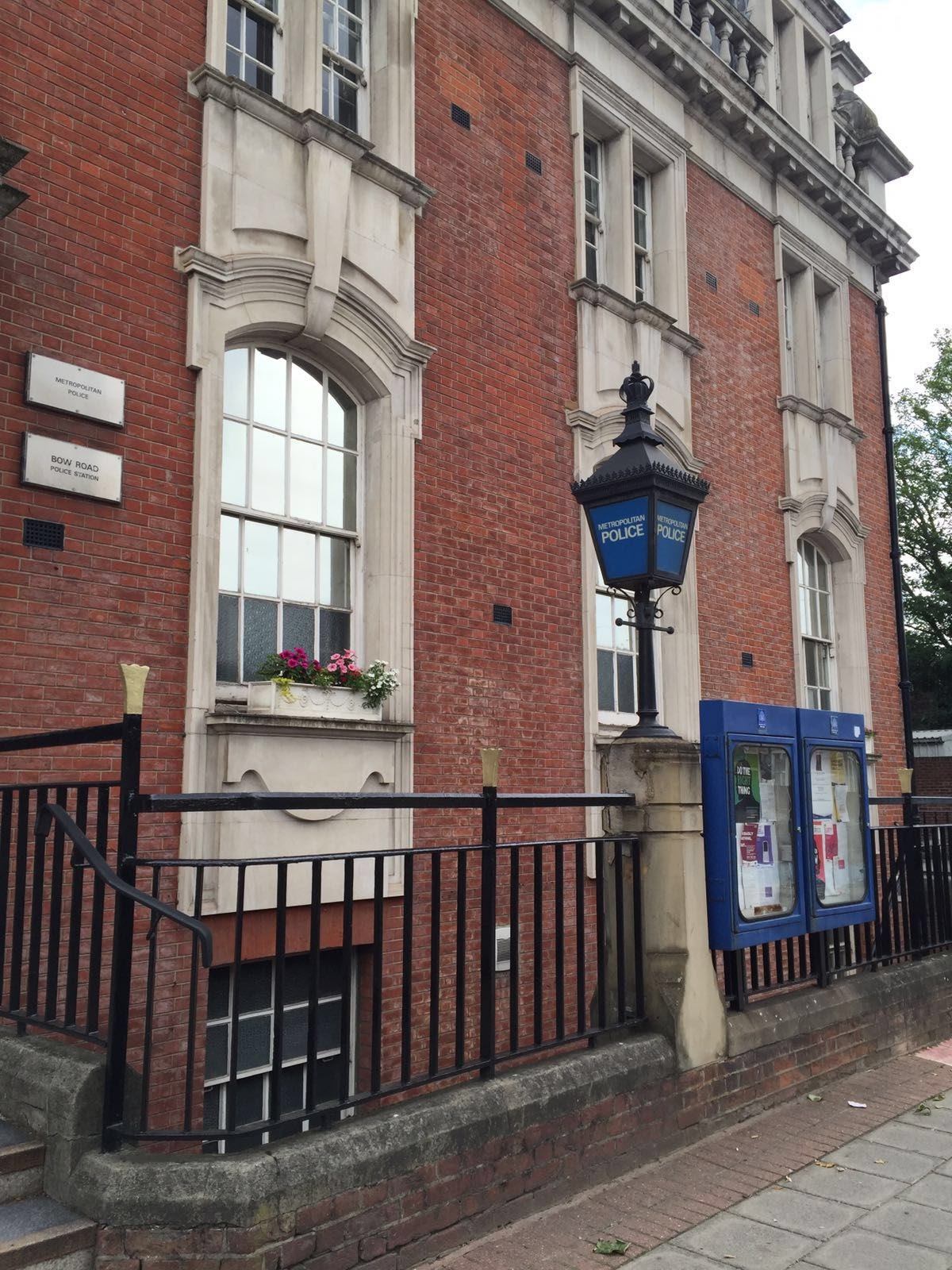
The Hall allowed the Suffragettes to group and share ideas for the feminist movement, with actions that were considered to be too loud and unruly, they were soon kicked out. This shows just one of the many struggles women had to face in East London as well as other parts of the world in order to be treated with more respect. They were pushed around and undermined whilst preparing for a world where women would no longer have to keep quiet but would be able to speak up and their voices would be heard and acknowledged.  Getting kicked out of the Bromley Public Hall was not the only trouble the Suffragettes went through as they were constantly getting in trouble with the police due to their methods of direct action. This resulted in many trips to the Bow Metropolitan Police Station, which was where they were often taken before they were sent to Holloway Prison.


Although the Suffragettes and the feminist movement did face a lot of opposition, there were still many people supporting the cause and hoping for women to receive the rights and freedoms they deserved. Among these supporters was George Lansbury, an MP elected in 1911. He was a strong supporter of women's rights and had the campaign support of Sylvia Pankhurst. After resigning to further his action on women's rights, Lansbury worked hard to ensure many less advantaged groups and groups that were not treated with respect would be treated more fairly. A memorial besides Central Foundation Girls' School was made in his honor.
George Lansbury Memorial
We felt it was amazing that the memorial for such a great advocate for women's rights was built right next to our Sixth Form and the school which encourages young women to work hard and fulfil their dreams without letting people limit our success due to our gender or even our race or age.

The Women's Suffrage Movement that worked through the 1840s to the 1850s had a great influence on the introduction of the Women's vote in the early twentieth century, as women such as the Suffragettes and George Lansbury left behind their ideas and inspiring actions to ensure the women of today had the chances that we do. The role of women in the UK especially, has been advanced greatly as we had our first female Prime Minister, Margaret Thatcher and after David Cameron's resignation, it seems our next Prime Minister shall be Theresa May, representing just how far women have come since the 19th century.

The Famous Caxton Hall - LSE Womens Walk

As part of the LSE Women's Walk, one of the few destinations was Caxton Hall.


Caxton Hall, in Westminster, was used to host the gatherings and meetings of many political groups, including the Women's Social and Political Union. The Hall was also used as an A list register office after the Second World War.


Caxton Hall - known for the many gatherings the Suffragettes had

Originally named Westminster City Hall, the Hall was used as a venue for many public meetings. The Women's Social and Political Union even held a 'Women's Parliament' at the Hall, as part of the Suffragette movement. They even tried to personally hand in a petition to parliament about the lack of women in parliament but did not succeed.


Caxton Hall was also the location for great demonstrations as the 19th of February 1906  presents the action of lobbying MPs by the Suffragettes. They marched from St James station to Caxton Hall with red banners to hear the news of whether the new government had included the enfranchisement of women in its programme. The lack of this implementation did not bode well with the room filled with women of all classes, some disguised to avoid recognition.


As Emmeline Pankhurst was so disappointed, she shouted with disgrace `We have risked our reputations, our limbs, and even our lives in the cause. But there is nothing.' With great anger and determination many women marched alongside Mrs Pankhurst to the Houses of Commons to lobby MPs on the lack of change for these women. They marched in the pouring rain and waited to be let in 20 women at a time, each group getting drenched as they waited.


The fierce determination and persistence of the Suffragettes were just few of their many great qualities that allowed the movement to be successful. They paved the way for many feminists showing how these qualities could help the movement and ensure that we get the changes we deserve.

LSE Women's Walk!


Being budding feminists, we took part of the LSE Women’s Walk which is a mobile phone app designed to combine smartphone technology with the amazing material found in the LSE Women’s Library. We wanted to see first-hand all the places the Suffragettes went to in London and what memory London has of them.

App added and we were ready to go!


The app was amazing as it had a clear route directing us to the different places in London where the Suffragettes made their mark. We started off local and visited places near us and slowly made our way outside of Bow. There were even some places we spotted that were not particularly on the app map, none the less we thought it was even more important to add these places on our blog!


Besides seeing all these wonderful and historic places, we had learnt so much along the way such as the countless times these radical women had ended up in the Bow Police Station and the significance of Caxton Hall.


https://www.blogger.com/blogger.g?blogID=5548810910886287002#editor/target=post;postID=371060115118947831;onPublishedMenu=overview;onClosedMenu=overview;postNum=29;src=postname
To view some of our visits click the image links..

https://www.blogger.com/blogger.g?blogID=5548810910886287002#editor/target=post;postID=2628535884846657331;onPublishedMenu=overview;onClosedMenu=overview;postNum=30;src=postname